Thursday, March 12, 2015

6 Weeks in New Zealand, 3 Major Differences in Schools

6 Weeks in New Zealand, 3 Major Differences in Schools
After spending six weeks getting acquainted in my new home and being able to visit several schools,  work with teachers, meet with administrators, and talk with experts in the field, I've noticed three major differences. At first glance and individually these may not seem like critical variations, however, they hold greater meaning when I critique them and integrate them into my studies on the literacy intervention process. More on that to come, as I continue to shape and aggregate information in an effort to form my Fulbright Capstone Project (stay tuned!) 

1. The "What?": 


No Locked Campuses:
Upon entering my first school visit, I noticed that I was able to waltz directly onto the school grounds. The office was not immediately present, nor was I required to immediately check in. Of course, I did check in with the office staff, but there was no buzzer to push, no name tag to be worn, and I did not need to sign my name in blood (joking). This notion of unlocked campuses seems to ring true for most schools I have visited. I often feel encroaching as I walk through the school yard to enter the main office. Occasionally,  I have had to sign in, but most times I am welcomed with a very warm smile and an offer of a tea, coffee, or water. Unfortunately, we, as Americans, have every right to have locked school grounds and to be on guard. We have witnessed horrendous tragedies on school campuses. Let us never forget. 
The "So What?": 
The feeling of safety and trust on the outside school grounds mimics the feeling of safety and trust within the school walls and classrooms. While New Zealand is quite safe (even the police do not carry guns), it is the overarching positive morale that I continually encounter when I visit schools that creates a zone of security. Schools are a place of safety, learning, and exploration. This openness extends to students, staff, and families. The lack of security on campuses is a metaphor for the learning that takes place. New Zealanders educational philosophy, from my observation, is one that does not want to put limits on students, wants to embrace teachers and their professionalism, and is welcoming to outsiders. 

2. The "What?": 

Say it isn't so...Kids being Kids!
Often during the day-to-day melodramatic daily routine, we forget that the little people who are seated in front of us have only been on this earth five, six, seven, eight years. Lucky for them, they haven't been hardened by this thing we call life.  What I have noticed in my observations of administrators, teachers, and parents/families (in the grocery store and on the street), is that children are allowed to be children. Children are free to roam and explore without the ever-crooked eye of the hawk-like adult.  How can it be? Are children still respectful? Do they still listen? Are they still safe? Do they still learn? YES! 
                One interesting event that my fellow Fulbright Distinguished Awards in Teaching scholars so excitedly reported to me after attending a beginning of the year (the school year starts in February) school-wide field trip (ages 5-12) was that the principal started the day by talking to all of the students (approximately 200 pupils). She asked the students, "Boys and girls, what is the MOST important thing you must remember today?" Little Cindy Lou replied "Listen to my teacher?". The principal replied "Yes, that is very important, however, the MOST important thing to remember today is to HAVE FUN". With that the whole school proceeded to have the most fabulous day. They went to a place with a pool, a stream, and a very large hill for the older students to hike. Five and six year olds were playing in a stream, children were running around with their shoes off, older children were hiking, and nobody was getting in trouble. Nobody got hurt, left behind, there were no tears, and no parents complained. Did they learn about the world around them? Did they solve problems that day? Did they make new friends? Did they complete their own purposeful learning? I would bet my bottom dollar on it! Children just being children.

The "So What?":  The attitude of letting children be children allows for curiosity to blossom and exploration to happen. In New Zealand, children being themselves is applauded and recognized. The whole child is NOT left behind. The whole child is celebrated. This instills a sense of confidence and a sense of self- that cannot be taught but must be cultivated. The experiences of letting children run, explore, and play are not ones that can quantified. There is no data that can be provided about the value of childhood and the freedom that comes with being a child. However, what is absolutely true is the necessity for these experiences. Just a theory... but perhaps this is why New Zealanders seem to be so open, accepting, and willing to help. Who they are was celebrated as a child and they learned to grow into accepting and confident individuals, who are strong enough in character to help support others. 


A typical teacher's desk! 

3. The "What?": No planning, no lunch, no in-school meetings-no worries!
After visiting several schools, it is common practice (actually, it is dictated by the Ministry of Education funding) that teachers do not have planning periods everyday. New Zealand teachers are given "release time". During this "release time" a deputy principal or team leader will cover the teacher's classroom. This "release time" amounts to two full-days each term. Some schools will allow teachers to take 1.5 hours every two weeks, some have teachers take the two full days when they want them, or some will have teachers take 45 minutes each week. Often this time is also bombarded with impromptu meetings or professional development. However, all staff, special education, parent-teacher, child study, and team meetings are held before or after school. I have been fortunate to attend some of these after-school meetings, which promptly end at 5:30pm (3:15-5:30pm). There are staff meetings once a week and team meetings once a week, therefore teachers are required to stay until 5:30pm twice a week. Stipends? Comp time? What's that? Additionally, there are no specialist teachers- no PE, Art, Music, Computer, or Health teachers. Classroom teachers are expected to teach all of these subjects, in addition to swimming. On one of my school visits, the year 3 (8 year olds) teacher was teaching students how to do an overhand throw. Lastly, teachers eat lunch with their students, although at some schools they do have a duty rotation. When do they plan and make copies? After-school. We all know teaching is not a glamorous job, however this level of commitment is commendable. 

The "So What?": As the above description sounds taxing and pretty "hardcore", there is a silver lining. Everyday, no matter which school you are, the students and teachers break for "tea time". There are two or three teachers on duty when the students have a 30 minute break,thus the teachers also have a break. However, you do not see swarms of teachers making the mad dash for the copier or book rooms, no one is gathering manipulatives, certainly there is not one child being held in to finish work or to be disciplined. All teachers (except the ones on duty) are making their way to the staff room, quite literally for a cup of tea or a hot coffee and a chat. Teachers are socializing, in fact it would be quite rude if you decided to stay in your classroom to prepare. Teachers and administrators value this time to socialize. Of course, get teachers in a room and informal discussions ensue around students, teacher frustrations, or lessons. Although, staff also discuss their personal lives...which child is going off to university, whose parents are elderly and ill, and their plans for the weekend.  One benefit to this system is that teachers are in control of their day. They can decide when they are going to teach cricket, introduce a song, or take a break to have students run a lap around the playground.  
     I was flabbergasted when I went on my first school visit and observed in a new entrants' classroom (kindergarten). The teacher was eating his lunch with the students, when I explained the US system of teachers eating separately from students, he looked at me and said "Well, I don't really think of it, it's a blessing to be with these students". It is not all rosy and beautiful, though, teachers are just as tired and just as frustrated; when I explain our prep system, our strong unions (they do have unions here), and our support from specialists, teachers are in shock and all say in their calm, chipper tones, "Well, that would be very nice". It makes me step back and realize how very lucky I am to work in a system that values teachers' daily tasks, allows them time to prepare, as well as, subsequently, values their own personal time.


Friday, February 27, 2015

A Welcome Friendly Visit

Exploring With A Friend

This past week I welcomed a friend, MJ, to the Land of the Long White Cloud (Aotearoa/New Zealand). We explored areas of Wellington, had some adventures in the South Island,  and  ran (quite literally) around some twists and turns.
Hiking the Abel Tasman National Park
Around each bend of our Aotearoa adventure we were in awe of the natural beauty of the world and felt truly blessed. I felt blessed not only for the stunning views and opportunity to explore, but also to be with a friend who was easy going and appreciative, who has a zest of life, and who helped me to appreciate all that this spectacular land has to offer. 

Below are from our travels around Welly. 
Now that's a farmers market! 
Botanic Gardens


Don't do it! Pushing the naked man in!
 Lord of the Rings, Te Papa
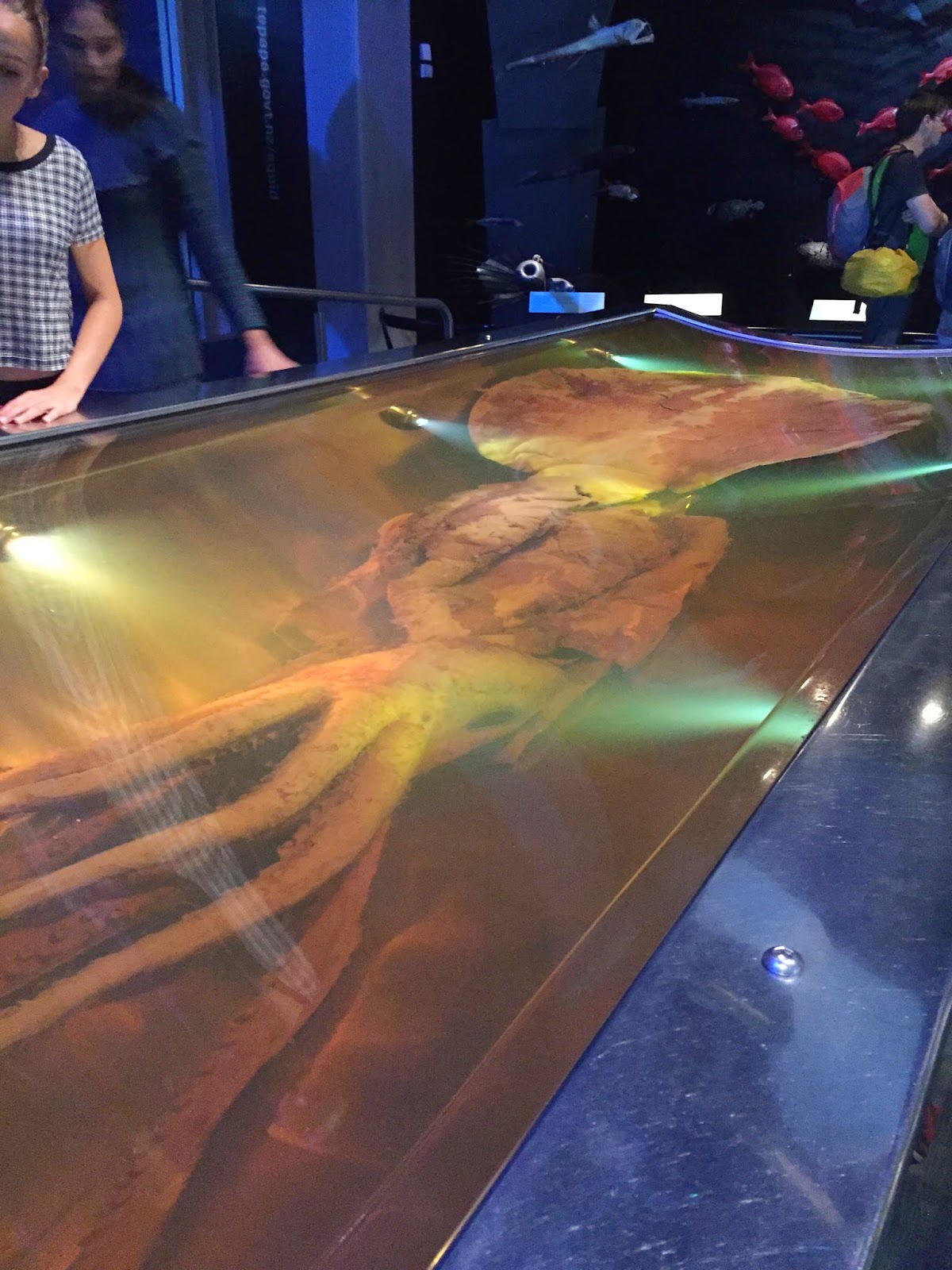
Largest squid ever caught, now frozen in time, Te Papa. 


MJ was a trooper, she arrived late on Saturday night and got up early on Sunday to explore Wellington. A cloudy day meant we hit the farmers market briefly and visited Te Papa Museum . I had not had a chance to visit the museum so I found the museum to have wonderful exhibits, be family friendly, cover a variety of topics, and it's FREE!


We then met up with my fellow Fulbright Teacher Scholar and good friend, Seth. We had a leisurely dinner, came home and packed for the next three days, where we would visit the South Island.
On the InterIslander Ferry!


A bit cloudy but we brought the sunshine!
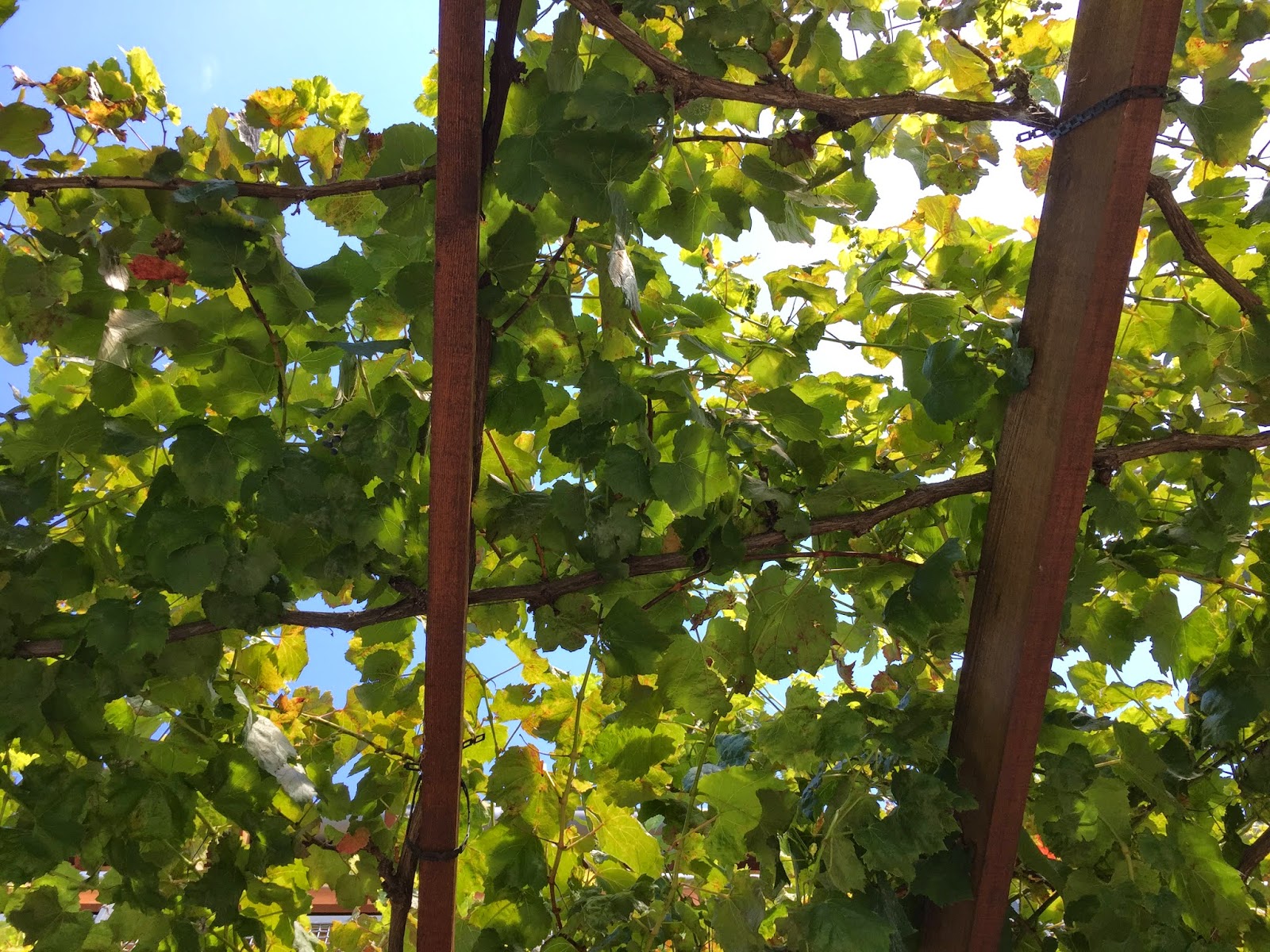
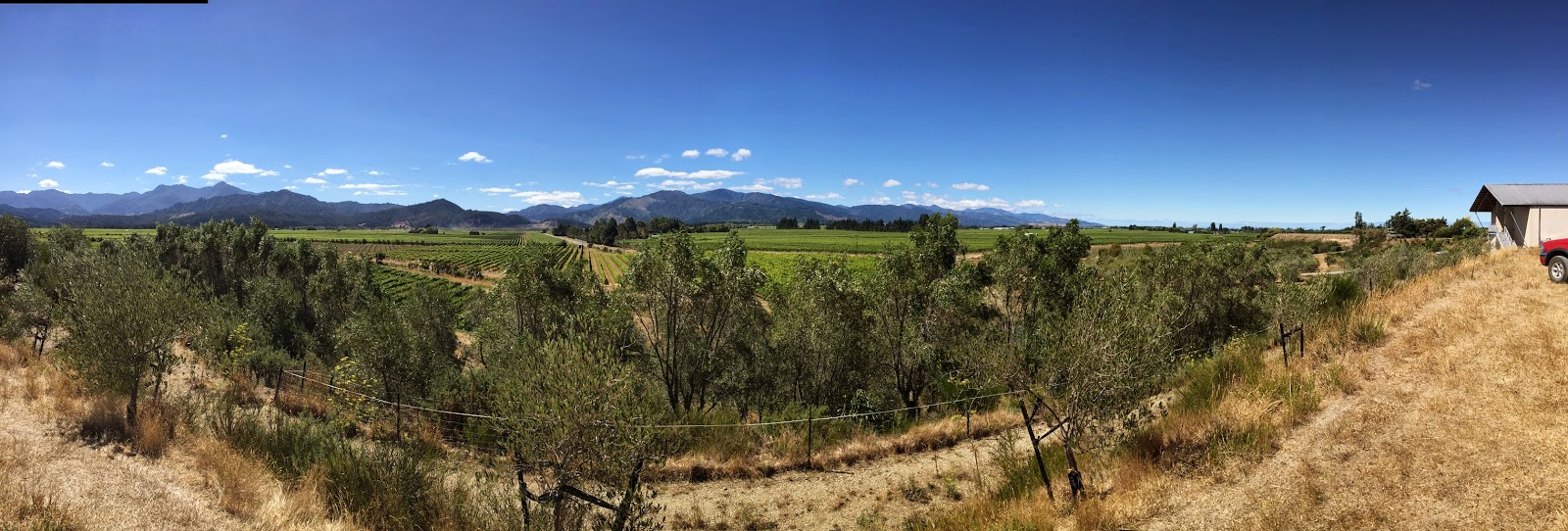
After arriving and renting a car (yes, I drove...with no accidents, if I do say so), we did a tour at the vineyards in Blenheim. The colors and tastes proved to be radiant.


 Views of the vineyards with the mountains in the background.


The colors are as vibrant as the people in New Zealand, with generous bursts of brilliance.


Our second day was a long drive on 'cruisy' country roads. Breathtaking!


More sheep than people, with mountains in the background.
 Stopped by the Nelson Lakes on our drive to Motueka.


Finally, we arrived at our hostel (yup, there's a first time for everything!). It was perfect, as we met some interesting people who gave us wonderful tips about NZ and traveling. 

The next day, and I have to say this was my favorite day, we took a water taxi up the coast from Kaiteriteri to the Abel Tasman National Park and then did a short 3 hour trek (hike). I have been very lucky to have  seen some beautiful places in my life, but this was like nothing I have seen. Around every turn the turquoise water was in view and the lush greenery was overhead. We heard lots of birds, especially the Tui- who sounds likes the mocking jay from Hunger Games.
 Listen to the sounds we heard on our trek! Tui in the Tasman Abel 


First swing bridge!
A little scary! I decided if I'm nervous crossing the swing bridge, bungy jumping is probably not in my future :( 


 I just can't get enough! No filters here. These ARE the real colors!


*Sea urchin and octopus *


After our hike and tour of Abel Tasman, we drove the twisty roads back to Picton. Again, we stayed in another hostel (an interesting experience-glad I packed an extra set of sheets!). Our final day concluded with a breakfast of DELICIOUS donuts and swimming with the dolphins. We weren't actually able to swim with the dolphins because the ones we saw were Hector's Dolphins, who are protected. However, they came up to play and sprinkled our toes with their breath! 


See the dolphins at play!Hector's Dolphins
Some interesting facts:
-Dolphins' brains have more emotional capacity for empathy than people (I think we can learn a thing or two!).
-Hector's Dolphins are some of the smallest dolphins and are protected by New Zealand Government.
-Dolphins use echolocation to send out "clicks" and then receive the vibration back to "read" it.
-Because of the echolocation, Dolphins can often detect an unborn child's heartbeat even before the mother knows she's pregnant. Dolphins are often attracted to humans who are pregnant because of the double heartbeat. If you are a woman swimming, you may not know you're pregnant but a dolphin will!
Find out more on Te Ara (New Zealand's AMAZING encyclopedia)


After our brush with the dolphins, we lazily boarded the ferry back to the North Island. On Friday night we went to the Night Market on Cuba Street with all its brilliant sounds, sights, and smells~Wellington Night Market! We also visited Zealandia (wildlife santuary in the middle of Welly) and the Wellington Botanic Gardens . We had a beautiful dinner at Bryan and Michelle's on Saturday night and on Sunday I ran the 1/2 marathon, Round the Bays. It was a spectacular race and one I will never forget. Sadly, on Monday I had to say goodbye to my lovely friend, however the memories and friendship will be forever lasting. 


Friday, February 13, 2015

tēnā koutou

    Visiting the Waiwhetu Marae (pronounced: why-fay-too,  mar-i with the long i sound)


tēnā koutou (ten-a (short "a" sound), ko-toe) in the Maori language is the plural form for hello, however it seems to hold more meaning, such as hello, thank you, and welcome all wrapped in one. During Fulbright Orientation, we had the fortunate opportunity to stay overnight at the Waiwhetu Marae. A marae is a communal or sacred place that serves religious and social purposes in Polynesian societies, specifically the Maori people in New Zealand (people and language pronounced: more-ee, with a rolled "r").  

Maori has had a resurgence in the last 20 years or so... For example, in New Zealand there are Maori tv and radio stations. Maori is used by most people in correspondence as a greeting ("Kia Ora Kate"), newscasters use Maori to greet people ("Kia Ora, Good evening, welcome to the 5pm news"), signs are both in English and Maori, there are Maori only schools (Kuru), and some schools are considered Maori immersion, where both Maori and English are spoken. Government websites are both in English and Maori. There is an emphasis to restore and keep the language and heritage alive.  


A bit of history:  The Māori people of Aortearoa (New Zealand) arrived by 1300 AD. There is debate about how many waka (sea-faring canoes, pronounced wok-a (short vowel)) arrived and exactly where they started. Some say that they made their way from Ratonga (Cook Islands), while others say they came from Radiate (Society Islands). However, similarity of place names and languages suggests a link between these islands and New Zealand. What is amazing is that these brave people chartered the stormy waters in these magnificent canoes. Waka are still used today for ceremonies and during specific times of year. The waka you see below are still in use, however are kept inside. (2/15/2015, http://www.tepapa.govt.nz)


Back of the waka


Front of the waka


Front of the waka


In 1640, British explorer James Cook was on a quest for the "Great Southern Continent" and came upon New Zealand, instead of Antarctica. He thought New Zealand would be a good place to harvest naval supplies (from the trees and bush= timber) and oil (from the abundance of seals). Thus, colonization began. Interestingly, there is large connection between the whaling industry in New Bedford, MA, Nantucket, MA and New Zealand. Many of the sea captains from these areas in Massachusetts came to New Zealand in search of oil.
In 1840, the Treaty of Waitangi was signed between representatives of Queen Victoria of England and more than 500 Maori chiefs who represented many tribes throughout the country. The Treaty of Waitangi was supposed to establish law and government in New Zealand. The English version of the treaty stated that sovereignty (power) would be given to the Queen of England, however the way it was translated into Maori misrepresented sovereignty.  The debate still continues to this day.
What is for sure is that the Maori people have a rich history and hold fast to their traditions and customs. As Fulbright Scholars we were welcomed onto their marae and experienced some of these traditions. We were welcomed onto the marae (as all guests are) in a pōwhiri (formal welcome ceremony, pronounced poe-for-ee).  After this ceremony visitors become part of the wharna (farna, extended family) and at the conclusion of this ceremony, it is as if to say  "this is now your home and you are welcome here".

Powhiri Video and Information 


When one enters the marae a woman will come out and call to the visiting group, then a woman from the visiting group will respond. The karanga (call) is used to invite strangers to enter the marae and for the visitors to introduce themselves. It is a way to state your intentions, either coming as friend or foe. The women walk onto the marae grounds first and the men are in the back to protect the women if an enemy were to attack from behind. Shoes are taken off  before entering (to keep the marae clean and pure); the men then enter the building first, women second. At the doorway the hongi occurs (touching noses)  and a ceremony ensues. 


During the ceremony gifts are offered from the visitors (usually in the form of gold coins), songs are sung by both hosts and visitors, and speeches are made. 
He tangata takahi manuhiri, he marae puehu
A person who mistreats his guest has a dusty Marae (Meeting house)
We were greeted with warmth and kindness. After the karanga, we had afternoon tea. Before each meal a blessing is made. Seth, my fellow Fulbright teacher scholar, sang his beautiful song for our first meal, "Live Everyday" "Live Everyday" (song by Seth Hoffman, fellow Fulbrighter)

After the blessing, we ate and ate and ate! What feasts! Not only were our meals delicious, our communion together was inspiring. During our meals we had beautiful and enriching conversations.

During our stay we also learned a great deal about the marae and Maori heritage by having some amazing speakers. 
Speaker, Amber Kiri Aranui, who is from Te Papa Museum , she is in charge of repatriation of Maori remains.


Activity we did: We drew where our ancestors settled and then others kept taking pieces of our drawings/land. Discussion followed about how we felt having our land and heritage taken away, much like the Maori people. 
Kura Moeahu, who discussed the Treaty of Waitangi with us.

The inside of the marae. Beautiful carvings and weavings. The inside of the marae represents the inside of the body.


Weavings on the wall, represents "stairway to heaven".


Upon leaving the marae the next day, we-the visitors- sang a song to show our gratitude, as well, our hosts sang a song, and we again closed with the hongi (touching of noses). 

This was an exceptional experience. There was a sense of peace felt by all, feelings of mutual respect for our surroundings, much learning, several moments of laughter, and there was a connection to each other, the natural world, and our ancestors.
Fellow Fulbright Distinguished Awards in Teaching Recipients outside of the Waiwhetu Marae. 


E hoa ma, ina te ora o te tanager
My friends, this is the essence of life